
Machined castings & OEM housings
An irregular cast body needs secure support while its flange and openings are machined. Blank allowance and mating-face datums guide the setup; the finished-part drawing sets fitted bores and any sealing areas.
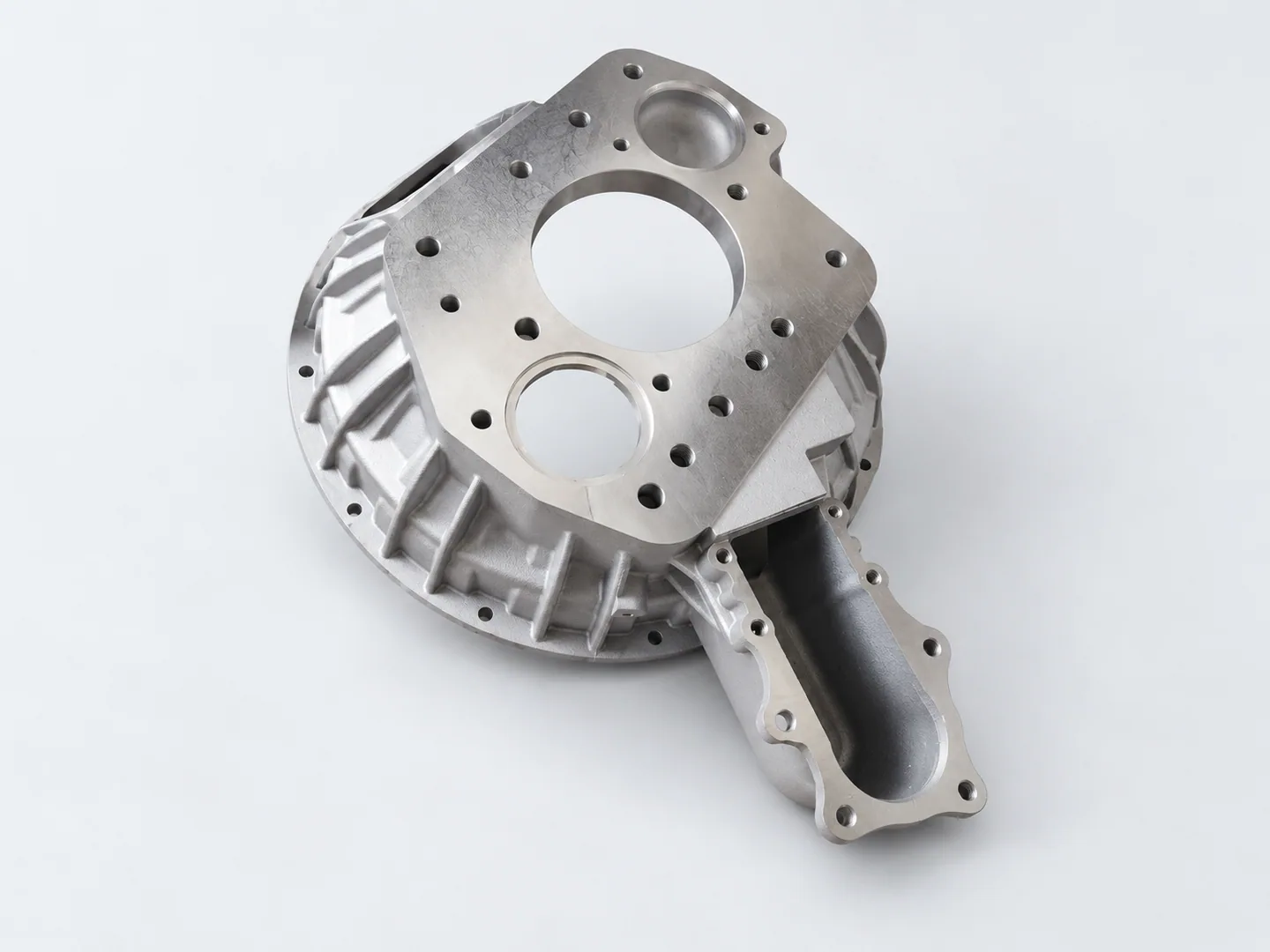
The flange as an assembly reference
The locating face and bore or hole pattern establish the installed position. The drawing distinguishes any sealing area from the rest of the flange and shows allowance on the cast blank.
Sealing faces, bearing fits and tapped mounting points must stay related as the irregular casting is repositioned.
| Feature | Drawing requirements | Acceptance checks |
|---|---|---|
| Seal faces | Locate seal faces from the casting datums. Specify seal-face geometry, flatness, texture and mating requirements. | Seal-face geometry. |
| Bearing fits | Locate fitted bores from agreed casting and machining datums and specify their fit limits. | Bearing-fit limits. |
| Mounting features | Specify tapped mounting points, thread callouts, hole relationships and final wall geometry. Define thread and mounting-pattern checks. | Thread and mounting-pattern checks. |
| Allowance & defect acceptance | Distinguish stock allowance from finished wall thickness so the irregular blank can be located. Set limits for exposed casting defects on functional surfaces and identify required inspection records, including CMM or gauges. | Set limits for exposed casting defects on functional surfaces and identify the CMM or gauge records required. |
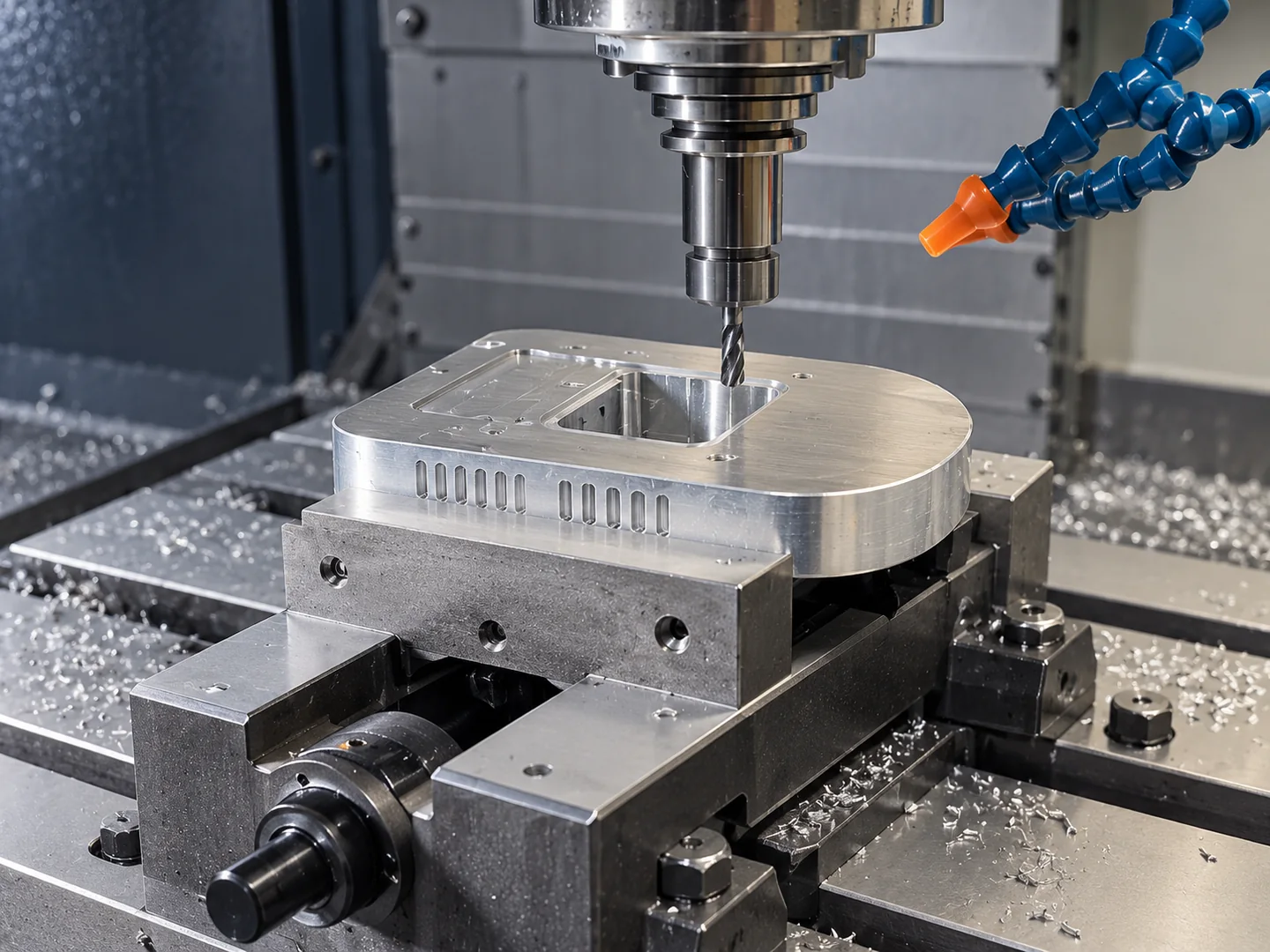
Supporting an uneven body to machine the flange
We use the outer casting shape to find support areas with enough tool clearance. Blank contact points and stock allowance determine where we can establish the finished flange and opening datums.
For sealing faces, specify flatness, surface condition and acceptance in the final treated state. Include the gasket design and any leak or pressure test required for the assembly.
An irregular-part fixture locates the casting from agreed datums. The workholding plan carries those datums into each operation on the working interfaces.
These are OEM housing references with bearing, mounting and threaded features. The approved drawing defines the application for your order.
Related machining and part forms
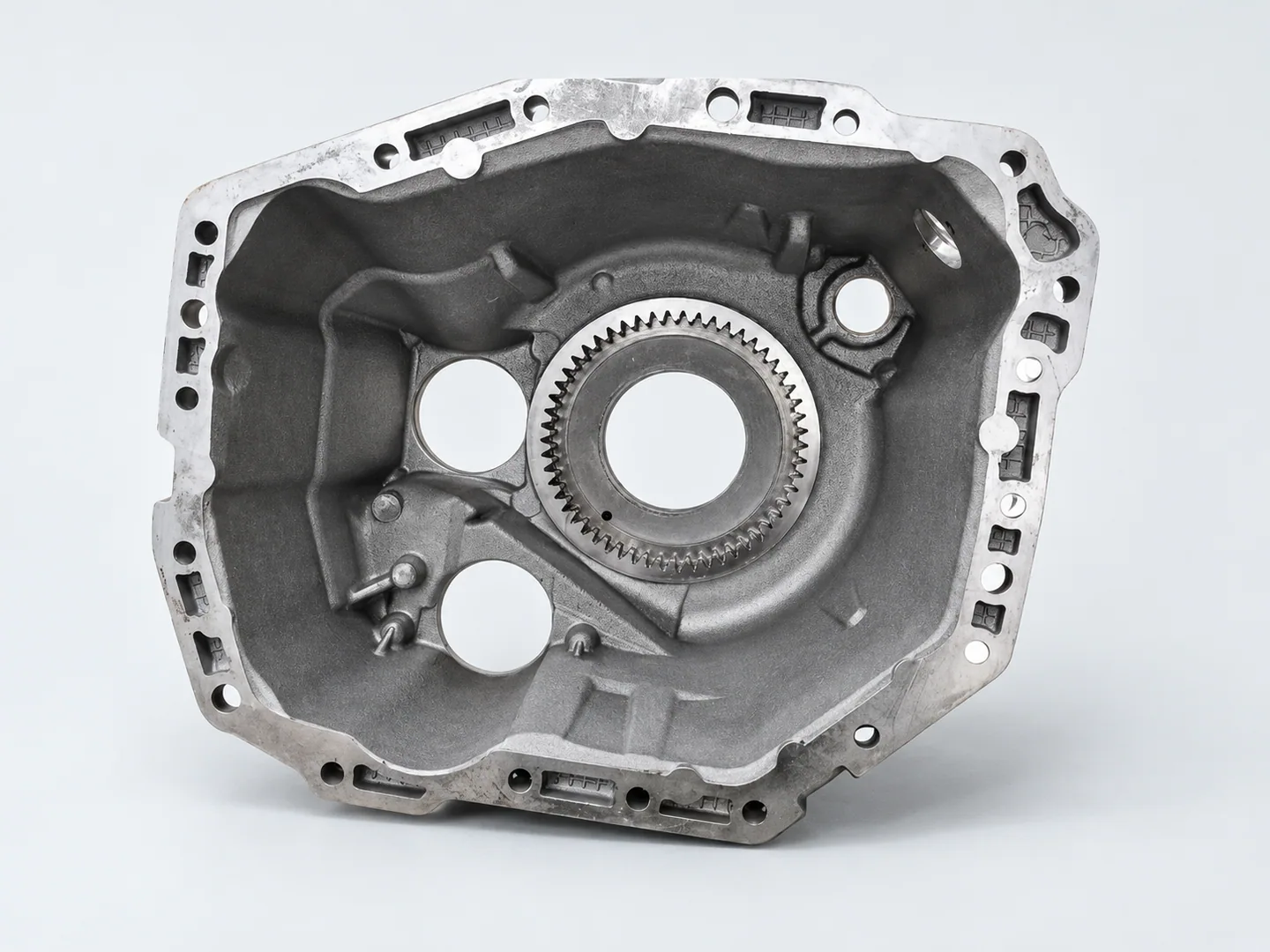
Cast housings & structural enclosures
Open ribbed housings require tool access through a cavity. Irregular flanged bodies require a stable relationship between the mating flange and fitted openings.
Request a quote for your part
Supply scope
Blank and finished models identify machining allowance and datum targets. The order sets the blank supplier, incoming acceptance, permitted variation, retained cast surfaces and responsibility for rejected blanks. Missing geometry needs a separate drawing-approval stage.
- Casting & finished partCasting specification, controlled blank and finished models/drawings, alloy and condition, machining allowance and blank-supply details.
- Acceptance & orderProtected machined dimensions, treatment and required inspection records, quantity and delivery destination.
Tell us how the part will be accepted, including measurement methods, its condition at inspection, sampling and report format.