
Turned brass & copper components
Small threaded brass and copper components combine mating threads with wrenching and contact surfaces. The alloy, thread fit and finish need to account for any electrical or thermal contact areas protected during plating.
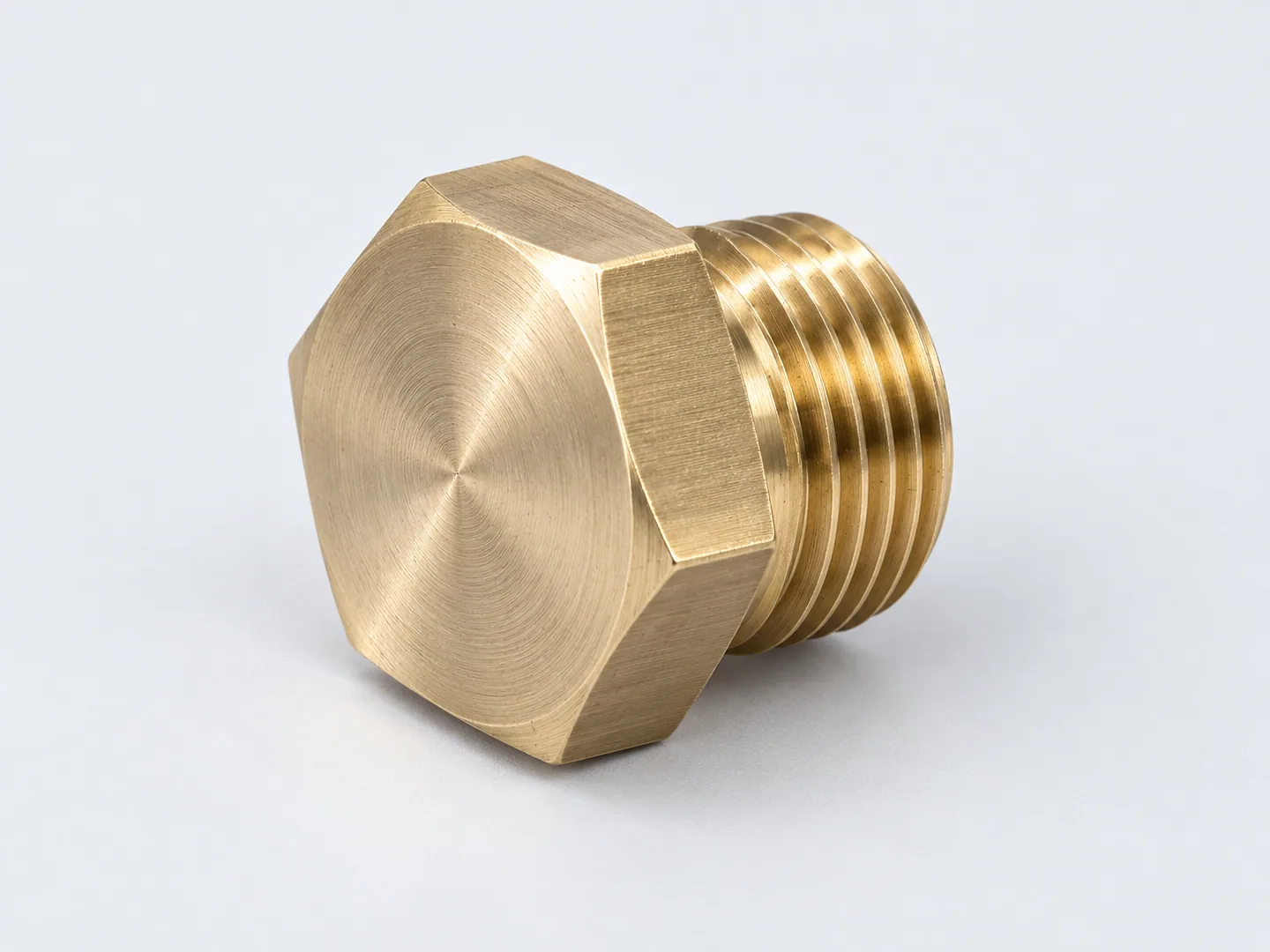
Thread fit, wrenching form and contact surfaces
Thread standard and engagement, wrenching geometry and the locating shoulder define the connection. Contact surfaces also need their own surface condition and functional acceptance requirements.
| Feature | Drawing requirements | Acceptance checks |
|---|---|---|
| Electrical contacts and fluid fittings | State whether conductivity, sealing, mechanical attachment or heat transfer controls the design. Provide the grade and standard for each acceptable alloy, material restrictions and dimensional criteria; copper and brass are not interchangeable specifications. | Function-specific material and dimensional criteria. |
| Contact areas and plating | Mark contact or seal areas, edge requirements, plating specifications and dimensions to check after plating for the selected material. Agree functional-test conditions and limits. No measured electrical or pressure performance is available for this example. | Plating, edge and separate functional-test limits. |
| Threads & mating parts | Include mating-part, thread and fastening specifications, with thread gauges, burr and surface limits. Conductivity and pressure tests require function-specific criteria. | Specify thread gauges, burr and surface limits. Conductivity and pressure tests have function-specific criteria. |
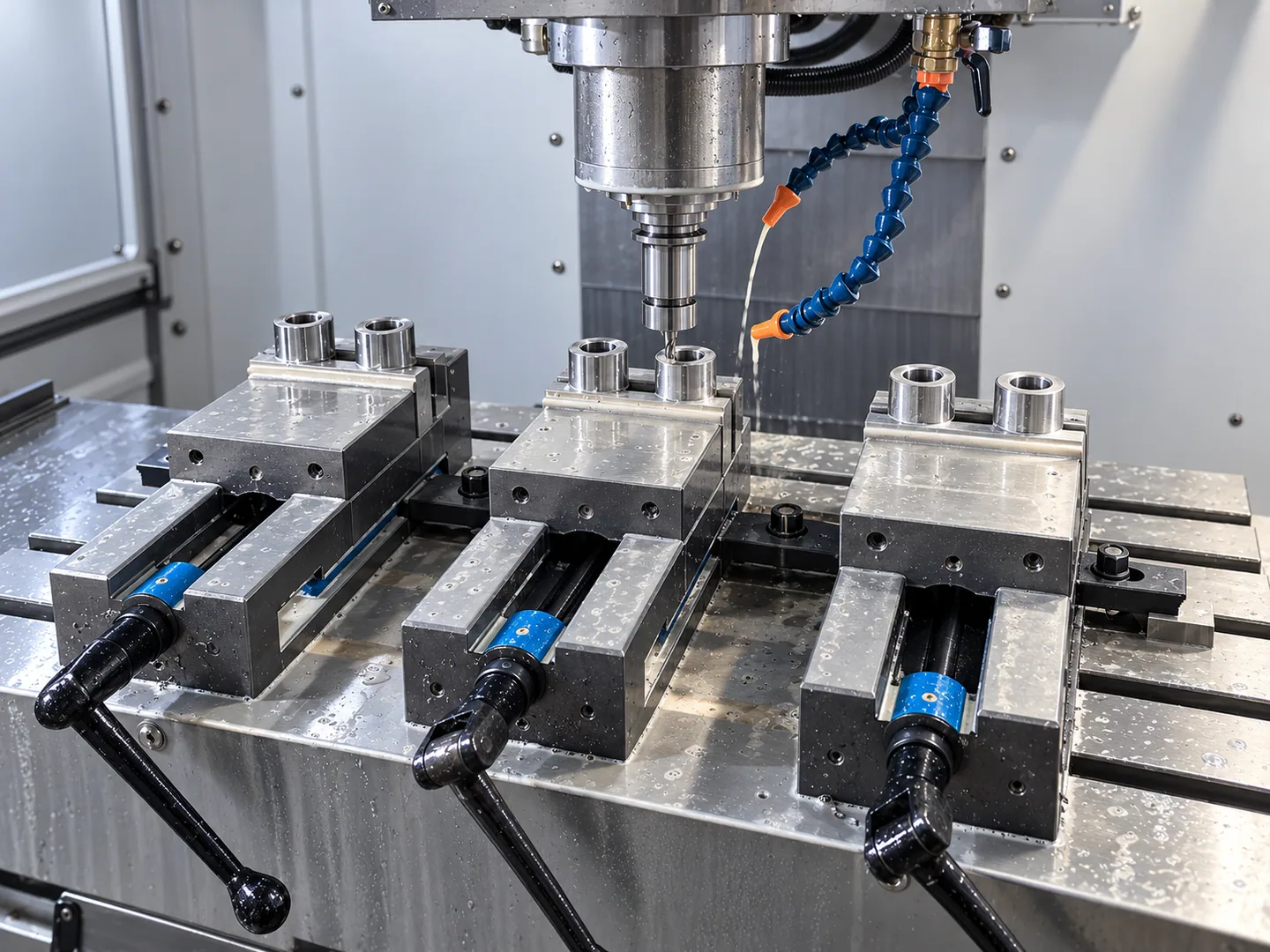
Machining and finishing a small threaded component
We review the turned profile, thread ends and contact face together, checking tool relief and edge requirements beside the wrenching features and at each thread start.
Specify the plating and protected areas, with thread acceptance in the final condition. Electrical or thermal requirements need defined criteria for the chosen alloy and contact surfaces.
Possible routes include turning, milling, multi-axis work and casting finishing. Feeds and deburring need to account for deformation in the specified soft metal.
Copper heat sinks and busbars need defined contact areas and conduction requirements. Brass manifolds, plumbing and industrial fittings need the specified alloy, threads and sealing interfaces.
Related machining and part forms
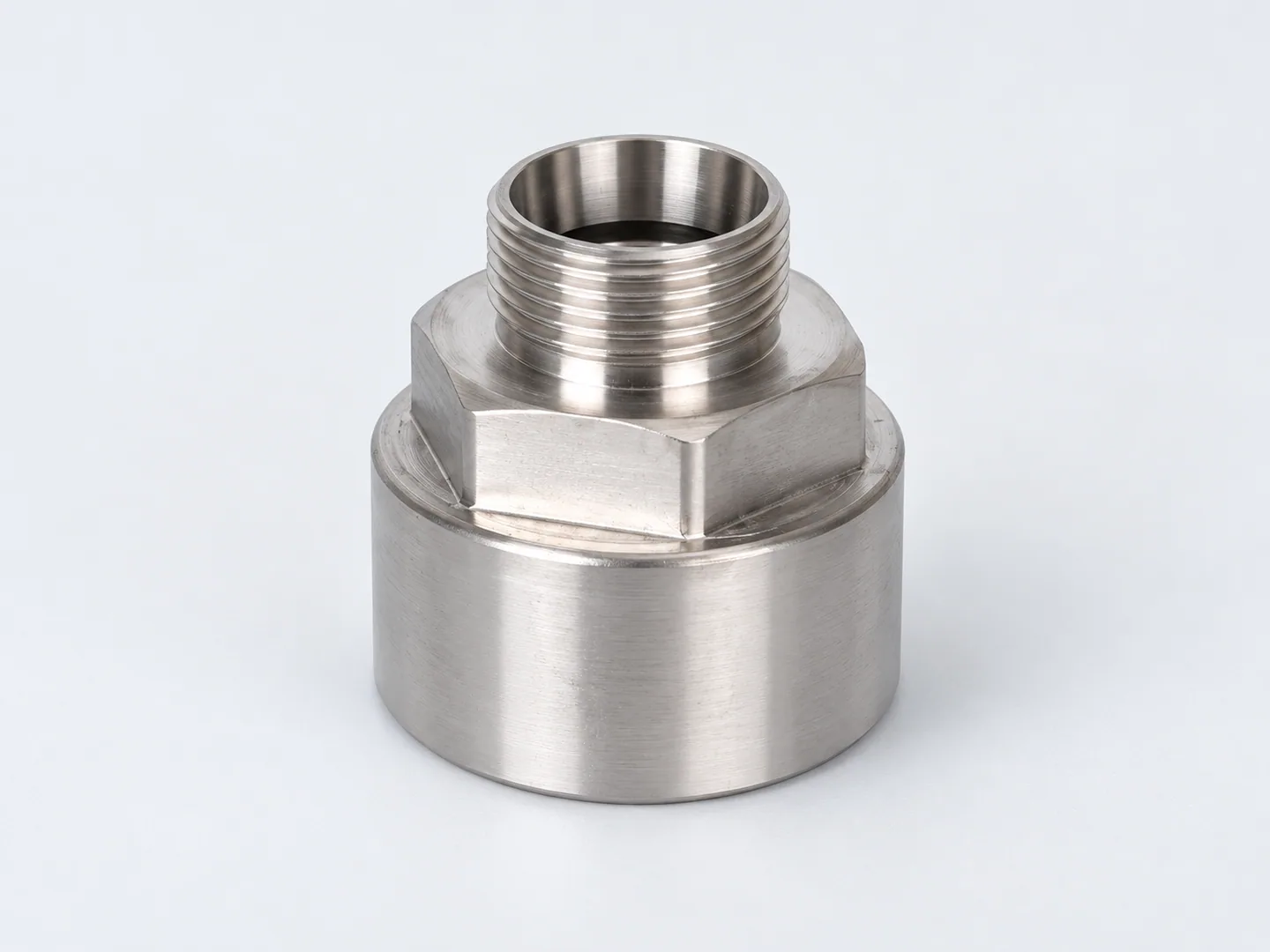
Turned fittings, connectors & flanges
Fittings and flanges cover the complete mechanical connection across materials. Brass and copper components add alloy, contact-surface and plating requirements.
Request a quote for your part
Order and release requirements
Each part number needs an approved revision, material condition, finish, release quantity and requested date, with shared interfaces and change authority identified. The order sets first-article checks, later sampling, traceability and nonconforming-part handling. Forecast demand stays separate from firm release quantities.
- Alloy & interfacesAlloy designation and standard for each acceptable option, material restrictions and mating-part information.
- Plating & destinationPlating specification, final-size and functional-test requirements, and delivery destination.
Tell us how the part will be accepted, including measurement methods, its condition at inspection, sampling and report format.